Francisca
Marketing · Vivencias Travel
The best window runs from April to December: January and February are the altiplanic winter, when rain can close roads and cancel El Tatio and Piedras Rojas. The most popular excursions, how many days to stay, and why the altitude demands planning.
The Atacama Desert is the driest desert on earth, and the trip carries one detail almost no Brazilian knows before booking: January and February, precisely the Brazilian holiday months, are the rainy season on the altiplano. It is called the altiplanic winter, and it can close roads and cancel the destination's two most famous excursions. This guide covers when to go, what to do and what you need to know before you fly.
When is the best time to visit Atacama?
To avoid rain, the safe window runs from April to December. It is that simple.
The altiplanic winter is concentrated in January and February. Despite the name it is not cold: these are summer rains falling on the altiplano, above 4,000 metres. The problem is not getting wet in San Pedro: it is that the water runs down the ravines, closes dirt roads and forces excursions to be cancelled. The two that suffer most are precisely the most sought-after: the El Tatio geysers and Piedras Rojas.
Among the summer months, December is the best: the rains have not really started and the desert is at its clearest.
An honest note: travelling in January or February is not impossible, and plenty of people do it and love it. But you should go knowing there is a real risk of cancellation: which is exactly why who you travel with matters more than ever: a local operator reworks the itinerary the same day; a package bought from far away does not.
What is the weather like in Atacama?
The temperature swing is the desert's signature. In January, San Pedro ranges from 8 °C at the start of the day to 25 °C at the hottest hours. It is normal to leave in a jacket at 6am and be in a t-shirt by midday.
The same rule applies all year: dress in layers. A base layer, a mid-season jacket and a windbreaker handle the whole day better than one heavy coat.
What to do in Atacama: the most popular excursions
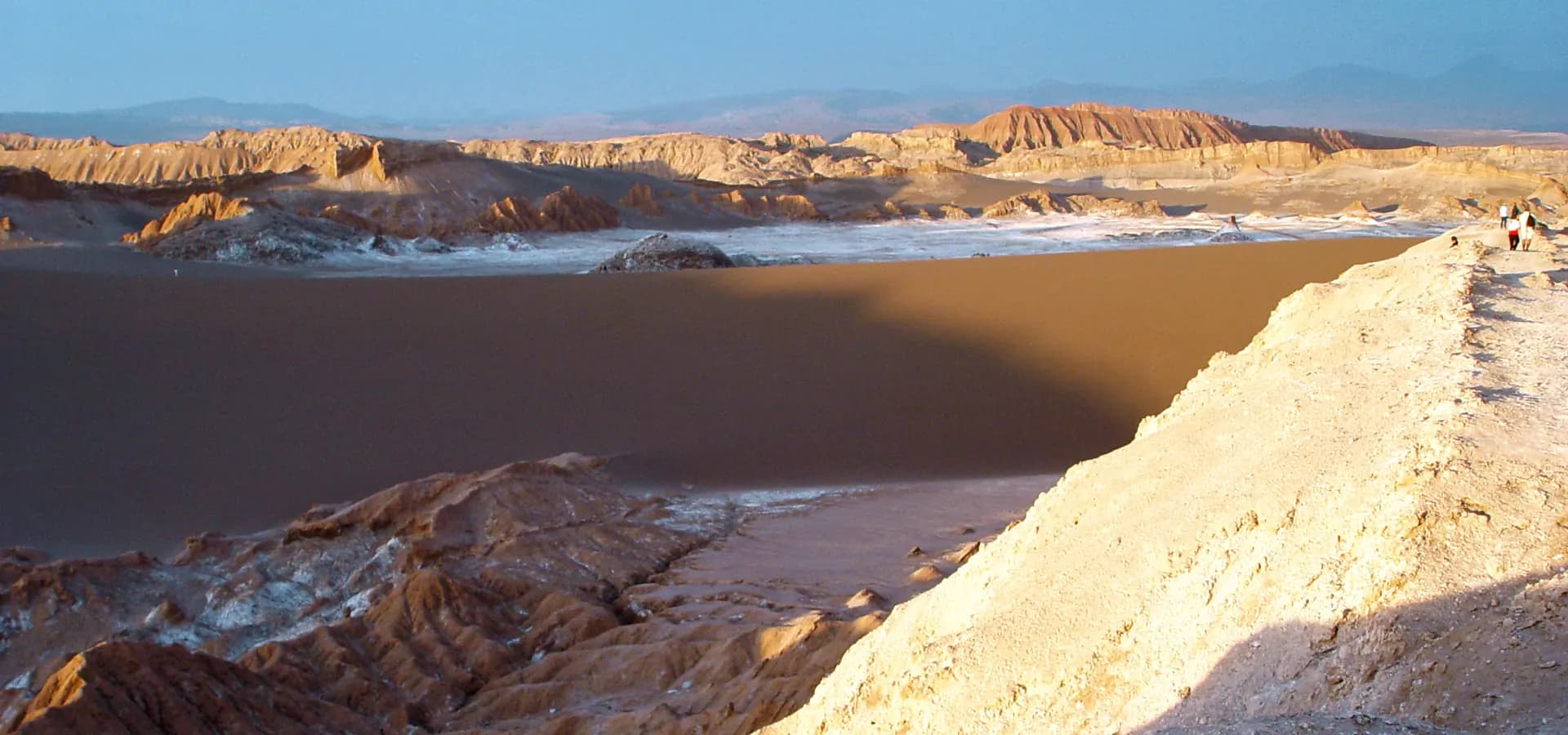
- Valle de la Luna. The gateway trip and the most photographed part of the desert. Salt and clay formations that look like another planet, and a sunset that is the destination's postcard. Close to San Pedro, half a day.
- El Tatio geysers. The highest geothermal field in the world, at 4,320 metres. It leaves before dawn because the fumaroles are strongest in the cold of sunrise. It is the most spectacular excursion and also the most demanding: read the altitude section below before booking.
- Altiplanic Lagoons and Piedras Rojas. Miscanti, Miñiques and the Salar de Talar, with that contrast of blue water, white salt and red rock. A full day, also at altitude.
- Laguna Cejar and the salt lagoons. Water so saturated with salt that you float without effort, like the Dead Sea. The day usually closes with sunset at the Ojos del Salar.
- Salar de Atacama and Laguna Chaxa. Chile's largest salt flat, home to three species of flamingo. Best in late afternoon.
- Astrotourism. Atacama has one of the clearest skies on the planet and is where the great observatories sit. Night tours with telescopes are a chapter of their own, and they depend on the moon: on full-moon nights you see far less.
- Valle del Arcoíris and the Yerbas Buenas petroglyphs. Less famous, quieter, with mineral-coloured mountains and rock art over a thousand years old.
What you need to know before you go
Five things that change the trip, and that most itineraries leave out:
- The altitude is real. San Pedro sits at 2,400 metres and the excursions climb far higher: El Tatio at 4,320 m, the altiplanic lagoons above 4,000 m. The advice is to wait two or three days in San Pedro before going up to El Tatio, to give your body time. People who arrive and climb the next day usually suffer for it.
- Not everyone should go up. High-altitude excursions are not recommended for pregnant women, small children, or people with high blood pressure or heart conditions. It is worth talking to a doctor first.
- Getting there. The airport is Calama, and from there it is about an hour and a half to San Pedro. There is no direct flight: you connect through Santiago.
- The sun is the strongest you will face. Desert, altitude and dry air combined. Factor 50 sunscreen, a hat, sunglasses and plenty of water: dehydration arrives without thirst.
- Bring cash. San Pedro is a small town; not everywhere takes cards, and the ATMs tend to have queues and limits.
How many days in Atacama?
Four days is the sensible minimum, and not out of itinerary fussiness: it is what acclimatisation requires. One day to arrive and take it easy, two for mid-altitude excursions, and only then El Tatio.
With five or six days you can add the altiplanic lagoons, a night of astrotourism and still keep a free morning. Going with two or three days means either cutting the main excursions or climbing to 4,300 metres without acclimatising, which is exactly what you should not do.
What pairs well with Atacama?
It is the natural question, since the flight to Chile is already paid for. The two combinations that work best:
- Santiago + Atacama. The most common and the easiest: the flight to Calama leaves from Santiago, so the capital slots into the itinerary naturally. Three days in Santiago, with wineries and the coast, plus four in the desert.
- Atacama + Patagonia. The two extremes of Chile on one trip: the driest desert on earth and the glaciers. It takes more days and more budget, but it is the trip people remember forever.
Documents
Brazilians enter Chile with just an ID card, as long as it is in good condition, has a photo that allows clear identification and is not too old. The physical version is mandatory: the digital one is not accepted at immigration. It is also worth checking current travel insurance requirements before flying.
If you are planning the whole trip, the complete guide to travelling in Chile covers documents, the best season, costs and how many days to allow.
Each of those trips now has its own page, with times, altitude and what to bring: Laguna Cejar, Valle de la Luna, Termas de Puritama and the Salt Flats Route with Piedras Rojas.
Frequently asked questions
When is the best time to visit the Atacama Desert?
April to December, to avoid the altiplanic winter rains, which are concentrated in January and February. Among the summer months, December is the best. Altiplano rain can close roads and cancel excursions such as the El Tatio geysers and Piedras Rojas.
What is the altiplanic winter?
Summer rains that fall on the altiplano, above 4,000 metres, mainly in January and February. Despite the name it is not cold. The problem is not rain in San Pedro but the water running down the ravines, closing dirt roads and forcing excursions to be cancelled.
How many days do you need in Atacama?
Four days is the sensible minimum, because acclimatising to the altitude takes time: an easy first day, two days of mid-altitude excursions, and only then El Tatio at 4,320 metres. With five or six you can add the altiplanic lagoons and a night of astrotourism.
Does Atacama cause altitude sickness?
It can. San Pedro sits at 2,400 metres and the excursions climb much higher: El Tatio is at 4,320 m. The advice is to wait two or three days before going up to El Tatio. High-altitude excursions are not recommended for pregnant women, small children, or people with high blood pressure or heart conditions.
How do you get to Atacama?
Through Calama airport, connecting in Santiago, there is no direct flight from Brazil. From Calama to San Pedro de Atacama is about an hour and a half by road.