Francisca
Marketing · Vivencias Travel
Rafting, snow, hiking, boat trips, vineyards. They are all sold as team building, but they do different things to a team. What to expect from each one, depending on the objective.
Almost every outdoor activity is sold as team building. In practice they do very different things: some force people to coordinate, some force them to talk, and some are simply a good time together, which is also a valid objective if you say so from the start.
This is what we see each one do, after running them with company groups in Chile and Argentina.
Rafting: coordination under pressure, clear roles
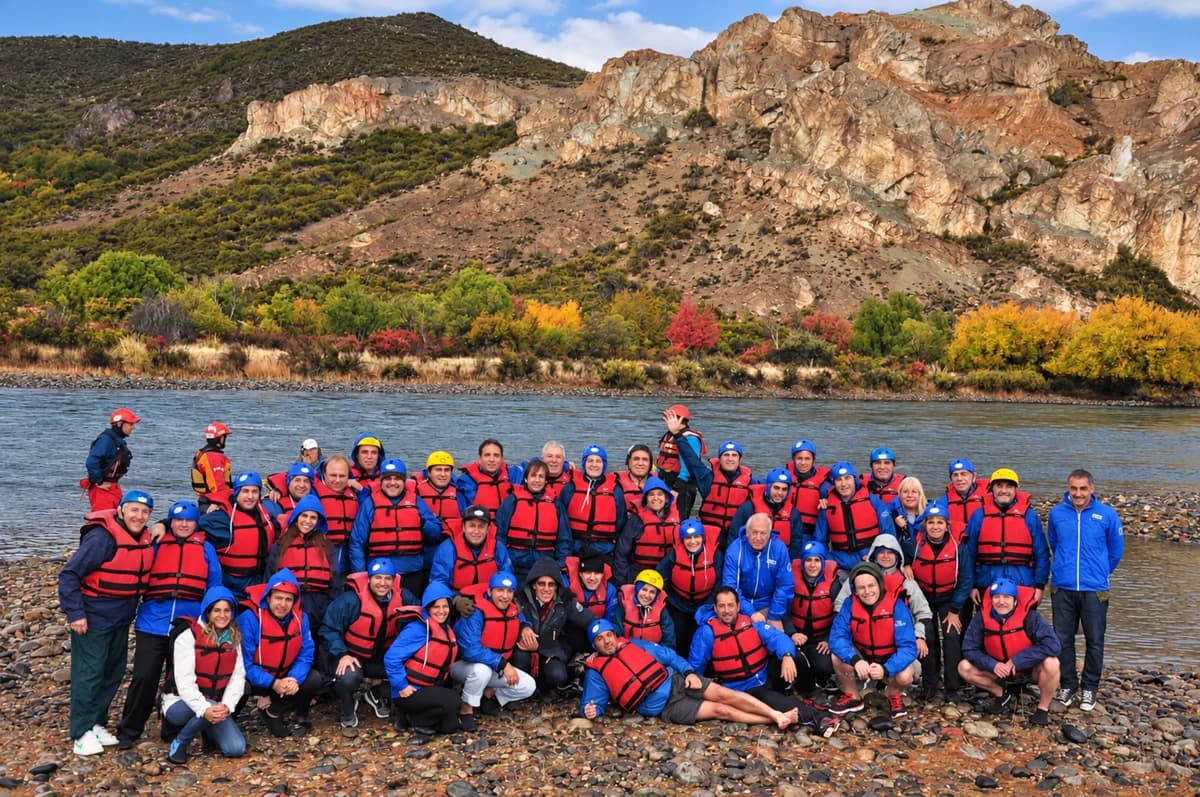
It is the activity that shows fastest how a team works. In a boat of eight there is one instruction, a short window to execute it, and an immediate consequence if half the boat paddles differently. There is no way to delegate it or do it halfway.
- Good for: teams that have to execute fast and in sync, or new teams that cannot read each other yet.
- Worth knowing: river levels change with the season. In Bariloche, the Manso and Villegas rivers offer different grades, and some stretches suit people with no experience. Near Santiago, the Cajón del Maipo puts it an hour and a half from the office.
- Who sits out: you can take part without being a strong swimmer, but it is not for everyone. There always has to be an alternative on the bank.
Snow and skiing: it flattens hierarchy like nothing else
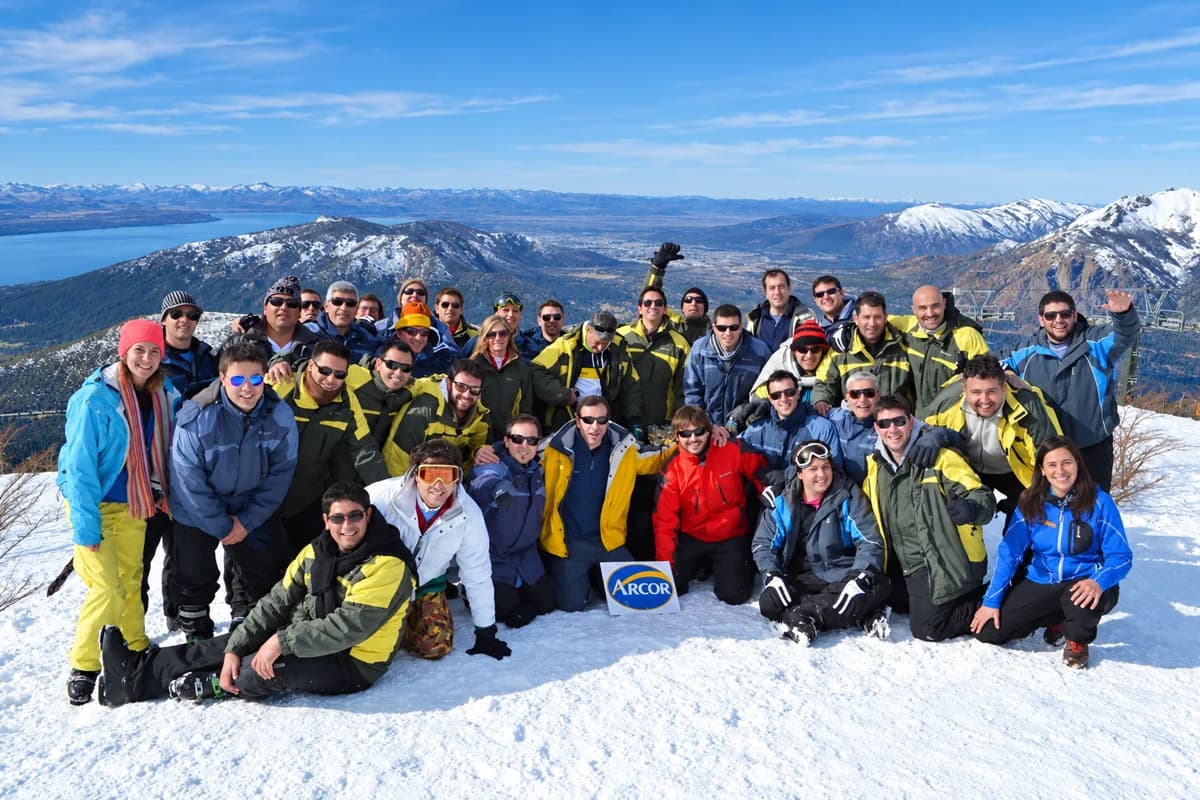
Nobody skis well on day one. The managing director and the analyst who joined two months ago both start from zero, both fall over, and both laugh. That effect is almost impossible to produce in a conference room.
- Good for: breaking down hierarchy, integrating merged teams, closing a year with something memorable.
- Worth knowing: a well-run beginners' lesson is the difference between a good memory and a frustrating afternoon. If the group has never been in snow, read the guide for people who have never skied before briefing the team.
- Who sits out: nobody, as long as the programme includes options without skis. There is plenty to do in the snow without going down a run, and the group still shares the day.
Hiking: the conversation that never happens at the office
Walking beside someone for two hours produces a kind of conversation that does not exist in a meeting room: sideways, with no agenda and nobody chairing the table. It is the most underrated activity and the one we are most often asked to repeat.
- Good for: teams that work together but do not know each other, distributed groups that meet once a year, moments when something has to be unblocked between two departments.
- Worth knowing: difficulty decides who takes part. A trail on the Circuito Chico is within reach of almost anyone; climbing Tronador is another matter.
- Who sits out: nobody, if you pick two route levels that end in the same place.
Boat trips and lakes: shared time without screens
A boat trip asks nothing of the group, and that is exactly its value. Ninety minutes on the water with no signal, everyone in the same space, does more for integration than a forced exercise. It works particularly well as the first activity of a programme, while the group is still stiff.
- Good for: opening a programme, large groups, groups with very mixed fitness levels.
- Worth knowing: Isla Victoria and the Arrayanes forest is the Bariloche classic and takes large groups. Kayaking on Lake Gutiérrez is the active version, for smaller ones.
Vineyards and food: the closing, not the centrepiece
A winery visit or a long dinner does not build a team on its own, but it is where people talk about what they did during the day. As a programme closer it works very well; as the only activity of the trip it is a company outing rather than team building, and it is worth calling it that.
- Good for: closing, rewarding, celebrating a result.
- Worth knowing: the wineries near Santiago are less than an hour from the city, and a sunset at a vineyard solves the last day without an early start.
- Who sits out: plan a non-alcoholic option as part of the offer, not as an awkward exception.
Choosing by objective
- Integrating a new or merged team: snow, hiking.
- Improving coordination and execution: rafting.
- Unblocking two departments: hiking, boat trip.
- Rewarding and celebrating: vineyards, food, boat trip.
- A large, very mixed group: boat trip, city tour, snow with options.
When none of them help
It needs saying: if the team's problem is structural (contradictory objectives between departments, a manager who is not working out, late salaries), an outdoor activity will not fix it and can make it worse, because people see money spent on an excursion instead of on the problem. Team building works on a team that is doing fine and wants to do better, or on one that is just forming. It is not a repair tool.
What makes it work, beyond the activity
- Keep it optional. Forced participation produces the exact opposite of what you are after.
- Always two levels. That is what lets the whole group be in the same place.
- Someone has to run it. Not an entertainer: a coordinator who knows when the group needs a coffee and when it needs to be left alone.
- Leave air in the day. Three activities in one day are not triple the team building. They are a tired group that talked to nobody.
If you are building the whole programme, how to organise an incentive trip covers the order of decisions and the timeline, and the company convention checklist covers rooms, catering and logistics.
Frequently asked questions
Which team building activity works for a large, mixed group?
The ones that do not depend on individual fitness: a boat trip, a day in the snow with options for people who do not ski, or a city tour. What matters is that the whole group shares the same place at the same time, with different levels of effort available inside the same activity.
Can you go rafting with no previous experience?
Yes, on the low and medium grade stretches, which is what is used with company groups. Each boat goes with a guide, everyone wears a life jacket and helmet, and there is a briefing on land first. You do not need to be a strong swimmer, but there always has to be an alternative on the bank for anyone who would rather not take part.
How many activities should a day include?
One main activity per day, plus a transfer or a meal with time around it. Three activities in a day do not multiply the effect: they produce a tired group that never had time to talk, which was the point in the first place.
Does team building help when there is conflict in the team?
Not on its own. If the problem is structural, such as contradictory objectives between departments or a manager who is not working out, an outdoor activity will not solve it and can read as money badly spent. It works better on a team that is doing fine and wants to integrate further, or on one that is just forming.