Francisca
Marketing · Vivencias Travel
In autumn it is class III and works for beginners. In summer snowmelt turns the same stretch into class IV. Why the season matters more than the operator, and how to pick your run.
There is something about rafting in Cajón del Maipo that almost no website explains clearly: the same stretch of river runs at different grades depending on the month. This is not marketing. It is Andean snowmelt raising the water level.
What that means in practice
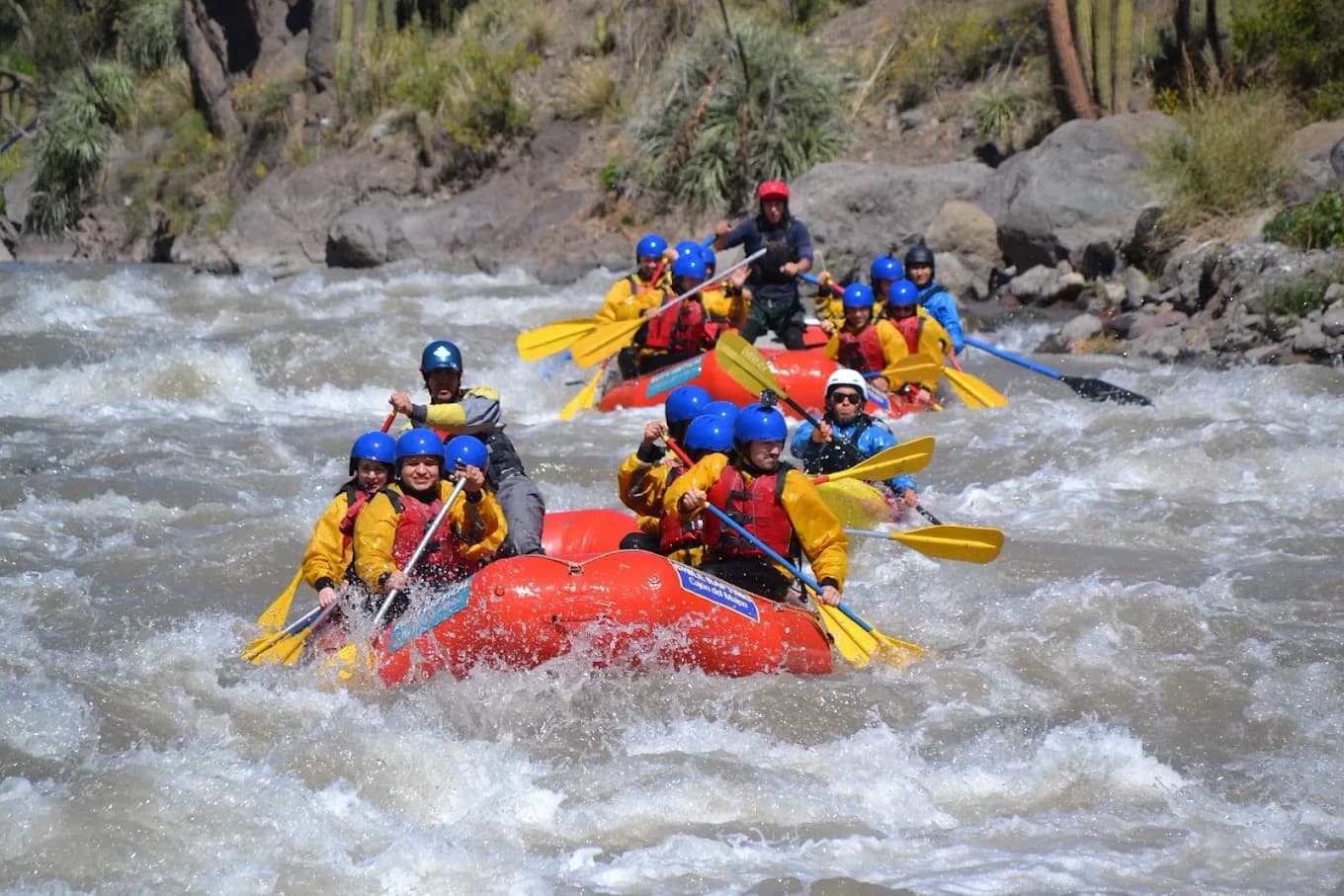
In autumn and at the end of the season, with the river low, the section between San Alfonso and El Melocotón runs as class III: rapids with enough bite to be exciting without compromising the descent for first-timers.
In summer, with snow melting above, the flow rises and the same stretch becomes class IV or harder. It is still a commercial trip with guides and equipment, but the demand is different, and the minimum age usually rises with it.
So when comparing prices between operators, ask first what level the river is at that week, not just the cost. Two trips identical on paper can be very different experiences in January and in April.
How the day goes
Pickup is usually at your hotel in Santiago, leaving around 9am and back near 5pm. The drive to the valley takes about an hour, although itineraries with more stops stretch to two and a half.
At base camp you are given a helmet, life jacket and wetsuit, and the instructors run the paddling lesson and the safety briefing before you get on the water. The descent covers around 16 kilometres, finishing at San José de Maipo or El Melocotón depending on the season.
Who can do it
On the class III version, practically anyone in normal physical condition, accompanied teenagers included. You do not need to be a strong swimmer, but you do need to tell the guide before boarding if you cannot swim, not afterwards.
On the summer version, with the river high, operators usually require a higher minimum age and some experience. Ask about that in writing when you book.
What to bring
Swimwear underneath, a towel and a full change of dry clothes, because you will be soaked head to toe. Footwear that can get wet, waterproof sunscreen, and no loose phone in your pocket.
If you are planning a full day in the mountains, see also Cajón del Maipo with Termas de Colina, the most requested trip in the same area.
Frequently asked questions
What grade is rafting on the Maipo river?
It varies with the season. In autumn, with the river low, the section between San Alfonso and El Melocotón runs as class III and suits beginners. In summer snowmelt raises the flow and the same stretch becomes class IV or harder.
How long is the trip from Santiago?
A full day, leaving your hotel around 9am and back near 5pm. The drive to Cajón del Maipo takes about an hour, although itineraries with more stops stretch to two and a half. The descent itself covers around 16 kilometres.
Do I need experience to raft the Maipo?
On the class III version, no: instructors run the paddling lesson and the safety briefing before you get on the water. On the summer version, with the river high, operators usually require a higher minimum age and some previous experience.
What should I bring rafting?
Swimwear underneath, a towel and a full change of dry clothes, because you will come out soaked. Footwear that can get wet, waterproof sunscreen and no loose phone: helmet, life jacket and wetsuit are provided at base camp.