
Francisca
Marketing · Vivencias Travel
Lastarria, Bellavista and Barrio Italia, with the average spend for each. What to order, what the Mercado Central is and is not, how the menú del día works, and why the bill arrives with a suggested 10% tip.
Santiago eats late, eats well and charges less than its reputation suggests, as long as you know where. This guide splits things by neighbourhood, explains what to order, and settles the two most practical questions: what it costs and how tipping works.
The three neighbourhoods that cover the trip
- Lastarria. The prettiest and the easiest to walk, between Cerro Santa Lucía and Parque Forestal. Sit-down restaurants, wine bars and cafés. The natural choice for dinner after a museum. Average dinner: CLP 45,000 to 80,000 per person.
- Bellavista. At the foot of Cerro San Cristóbal, this is the bohemian quarter: cheaper, livelier and more uneven in quality. Patio Bellavista is an enclosed courtyard with more than 20 options and its own security, and it is the easiest way to take the neighbourhood in. Average: CLP 15,000 to 35,000.
- Barrio Italia. Old houses turned into design shops, cafés and restaurants with courtyards. Less touristy, more popular with people who actually live in Santiago.
For something more formal, El Golf and Nueva Costanera, in Vitacura, hold the city's fine dining, at prices to match.
The Mercado Central: what it is and what it is not
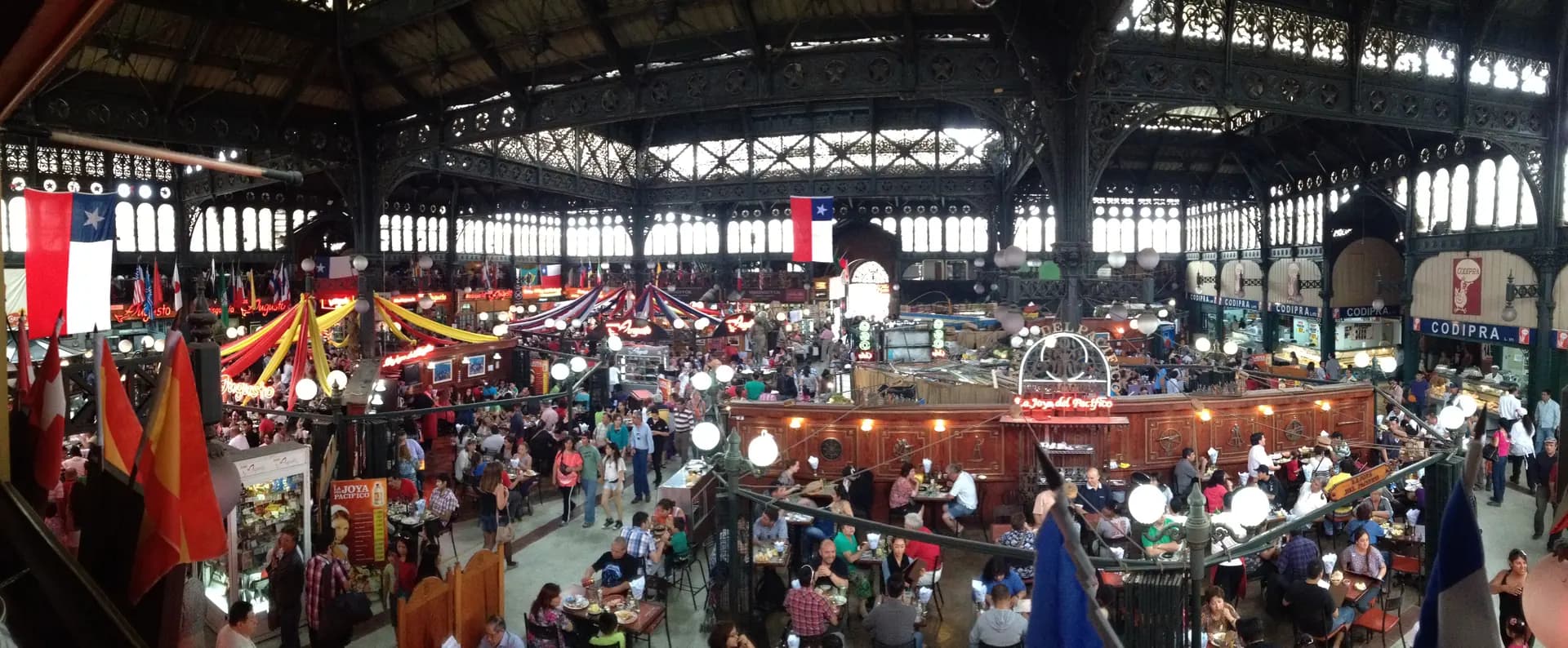
It is Santiago's culinary postcard, a 19th-century iron-framed hall full of fish and seafood restaurants. Worth the visit for the architecture and the scene.
Two things to know first: the heart of the market is touristy and more expensive, and waiters approach passers-by fairly insistently. And across the river is La Vega, the market where locals actually shop, with plainer kitchens at far lower prices.
What to order
- Empanada de pino. The classic Chilean empanada: minced beef, onion, olive, raisin and egg. The national snack.
- Pastel de choclo. A creamy corn pie over beef, chicken and egg, served in an earthenware dish. Home cooking, very Chilean.
- Chorrillana. Chips topped with beef, onion and egg. It comes to share, and it will floor you.
- Machas a la parmesana. A local clam gratinated with cheese, typical of the coast.
- Congrio and caldillo. The most Chilean fish of all, baked or in broth.
- Completo. The Chilean hot dog, with mashed avocado, tomato and mayonnaise. Cheap, and a street classic.
- Mote con huesillo. A sweet drink of dried peach with wheat, sold from park carts. Odd the first time, addictive the second.
How to save: the menú del día
At lunch, neighbourhood restaurants offer the menú del día or menú ejecutivo, with a starter, main, dessert and drink at a fixed price well below the à la carte one. It is the most efficient way to eat well for little, and it is what people who work in the city do.
Hours and tipping, the two things that confuse visitors
- Dinner is late. Restaurants fill up from 9pm. Turning up at 7pm usually means an empty room, and sometimes a kitchen still closing lunch service.
- A 10% tip. In Chile the bill arrives with a suggested 10% tip already calculated, and the waiter asks whether you want to include it. It is not required by law, but it is the custom and nearly everyone pays it.
For money, the guide to money changing in Santiago shows where to change without losing out, and the neighbourhoods to stay in help you be close to all of this. If wine is on the plan, the wineries are less than an hour away.
Frequently asked questions
Where should you eat in Santiago?
Lastarria for a pretty, walkable dinner, averaging CLP 45,000 to 80,000 per person; Bellavista for a more bohemian and cheaper night, between CLP 15,000 and 35,000, with Patio Bellavista the easiest option; and Barrio Italia for something less touristy. For fine dining, El Golf and Nueva Costanera.
What are the typical dishes in Chile?
Empanada de pino, pastel de choclo, chorrillana, machas a la parmesana, congrio and caldillo, the completo (Chilean hot dog with avocado) and mote con huesillo, a sweet drink of dried peach and wheat sold in the parks.
Is the Mercado Central in Santiago worth eating at?
It is worth it for the architecture and the atmosphere, but the heart of the market is touristy and more expensive, and waiters approach insistently. Across the river, La Vega is where locals actually shop and eat, with plainer kitchens at far lower prices.
How does tipping work in Chile?
The bill arrives with a suggested 10% tip already calculated and the waiter asks whether you want to include it. It is not required by law, but it is the custom and nearly everyone pays it.
What time do people have dinner in Santiago?
Late. Restaurants fill up from 9pm. Turning up at 7pm usually means an empty room, and sometimes a kitchen still closing lunch service.