Francisca
Marketing · Vivencias Travel
In winter Bariloche becomes a complete snow destination. You ski at Cerro Catedral, drive the Circuito Chico with the view from Cerro Campanario, taste chocolate on Mitre street, eat fondue in Colonia Suiza and, even without skiing, sledge and tube on Cerro Otto.
In winter, between June and September, Bariloche turns into South America's leading snow destination. You ski at Cerro Catedral, drive the Circuito Chico with the view from Cerro Campanario, taste chocolate on Mitre street, eat fondue in Colonia Suiza and, even without skiing, sledge and tube on Cerro Otto.
What is there to do in Bariloche in winter?
The snow season generally runs from June to September, and the town offers something for every profile. Those after adrenaline ski or snowboard at Cerro Catedral and at Cerro Bayo, in Villa La Angostura. Those who prefer a gentler pace drive the Circuito Chico, ride the chairlift up Cerro Campanario and take in the white landscape of Nahuel Huapi. Families with children find sledging runs, tubing and snowshoe walks at Cerro Otto and Piedras Blancas. And there's the food side, with the historic chocolate shops on Mitre street and the alpine cooking of Colonia Suiza. A practical tip: save the Circuito Chico or Cerro Campanario for your first days, leaving the ski mountains for once you've acclimatised to the cold.
Is it worth skiing at Cerro Catedral?
Cerro Catedral is the largest ski resort in the Southern Hemisphere, with around 120 kilometres of runs and more than 30 lifts (gondolas, chairlifts and drag lifts) reaching about 2,000 metres. It sits roughly 19 kilometres from the centre of Bariloche and can handle tens of thousands of visitors, with runs for every level, a snowpark, off-piste terrain and a play park for first steps in the snow. At the base there's a large complex of restaurants, shops, ski schools and clothing and equipment rental, plus a small shopping centre. It's well worth it for anyone who really wants to ski, but it also welcomes non-skiers, with sledging, tubing, snowmobile rides and snowshoe walks. You get there by rental car, public bus or organised transfer.
What are the Circuito Chico and Cerro Campanario like in winter?
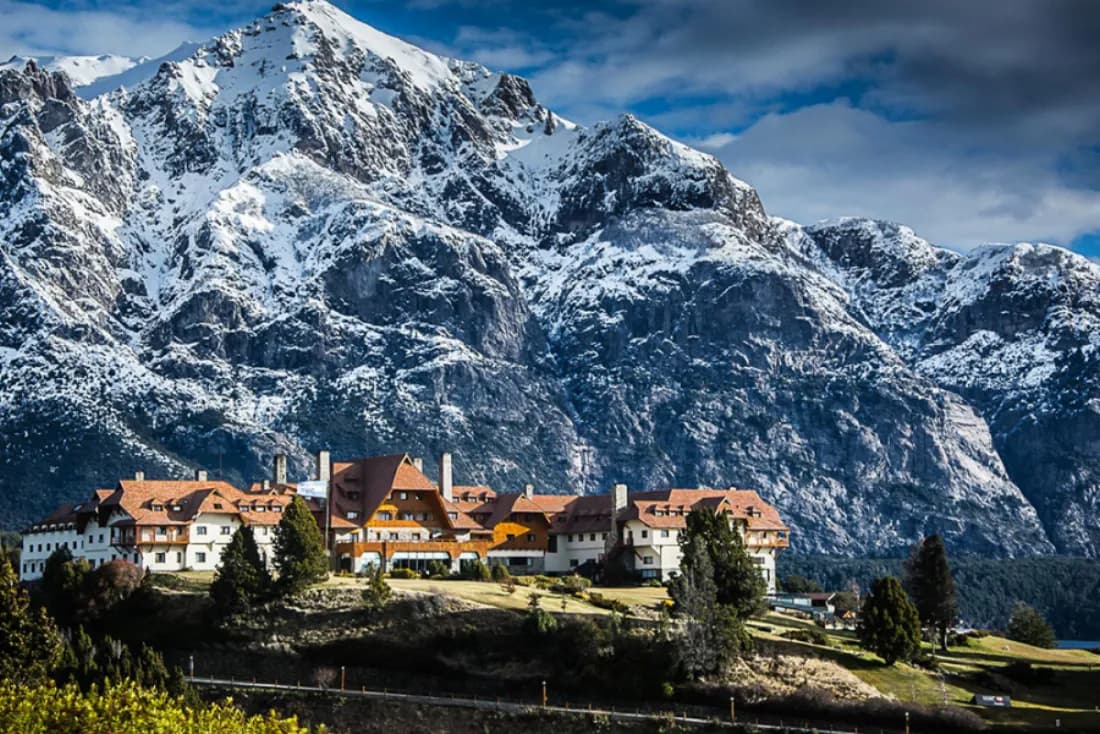
The Circuito Chico is Bariloche's classic scenic drive, about 65 kilometres and roughly 4 hours, taking in the finest landscapes around the town. Traditional stops include the iconic Llao Llao Hotel, the Punto Panorámico viewpoint, the San Eduardo chapel, the rosehip factory and Cerro Campanario. In winter it's best done by car or on a guided tour, since the road can get slippery. The highlight is Cerro Campanario: a chairlift takes you to the top, where one of Patagonia's most famous views opens up, with the lakes and snow-covered mountains in 360 degrees. At the summit there's a café with viewpoints, open daily. It's one of the most celebrated lookouts in the whole region and delivers the best photos of the trip.
What can you do in Bariloche without skiing?
You don't need to know how to ski to enjoy the snow in Bariloche. Cerro Otto is one of the town's best-loved mountains, with sledging, tubing runs, viewpoints, a maze, panoramic decks and a famous revolving café where you drink hot chocolate while admiring the view. At the top there are sledging runs for all ages, a zipline and snowshoe walks. The areas of Cerro Catedral, Cerro Otto and Piedras Blancas all offer sledging, with Piedras Blancas considered one of the best for it. One of the most magical outings, especially with children, is the husky-drawn sled through snowy forests. You can also go ice skating and take boat trips on Lake Nahuel Huapi towards Isla Victoria and the Arrayanes Forest, with no physical effort at all.
Where to eat chocolate and visit Colonia Suiza and Villa La Angostura?
Bariloche is Argentina's national capital of chocolate, and on Mitre street alone there are more than fifteen historic chocolate shops to taste and buy from. The tradition comes from the Swiss immigrants of the Goye family, who settled in the late 19th century in the area that became Colonia Suiza and adapted European recipes to Patagonian ingredients. Colonia Suiza still preserves that alpine heritage, with fondue, goulash and spätzle on the menus (dishes that pair perfectly with the cold) plus the curanto, a communal dish typical of the Wednesday and Sunday fairs. To round it off, take a day trip to Villa La Angostura, on the shore of Nahuel Huapi, with its charming streets and alpine chalets. That's where Cerro Bayo sits, a boutique resort founded in 1978, with around 200 skiable hectares, runs for every level, tubing, snowshoeing and a more intimate atmosphere than Catedral.
If you are planning the whole trip, the complete guide to travelling in Argentina covers documents, the best season, how many days and how to pair it with Santiago.
Frequently asked questions
What is there to do in Bariloche in winter?
The season runs June to September. Thrill-seekers ski at Cerro Catedral or Cerro Bayo; those after a slower pace drive the Circuito Chico and ride the chairlift up Cerro Campanario; families with children find sledging, snow tubing and snowshoe walks at Cerro Otto and Piedras Blancas.
Is skiing at Cerro Catedral worth it?
It is. It is the largest ski resort in the southern hemisphere, with around 120 km of runs and more than 30 lifts reaching about 2,000 metres, 19 km from central Bariloche. It has runs for every level, a snowpark, and a play park for first steps on snow.
Can you enjoy the snow without knowing how to ski?
You can, and plenty of people do. Cerro Otto has tubing descents, viewpoints and a revolving café with a view. At the top there are sledging runs for all ages, a zip line and snowshoe walks. Piedras Blancas is considered one of the area's best spots for sledging.
What is the Circuito Chico like in winter?
It is about 65 kilometres and roughly 4 hours, passing the Llao Llao Hotel, the Punto Panorámico, the San Eduardo chapel and Cerro Campanario. In winter it is best done by car or on a guided tour, as the road can get slippery.