Francisca
Marketing · Vivencias Travel
Meeting room, catering, transfers, a weather plan B and one person in charge on the ground. What has to be settled at each stage, and the points where something always slips.
An off-site convention differs from one at the office in one big way: when something is missing, you cannot pop out and buy it. A projector that will not connect, a room that cannot be reset in time, a bus that does not arrive: on location these have no quick fix, which is why all the work sits in the planning.
This is the checklist we use, ordered by when each item has to be settled.
Twelve to eight weeks out
- Date and headcount, firm. Everything else is quoted on those two numbers. If the headcount is still moving, work with a range and say which ceiling is committed to the hotel.
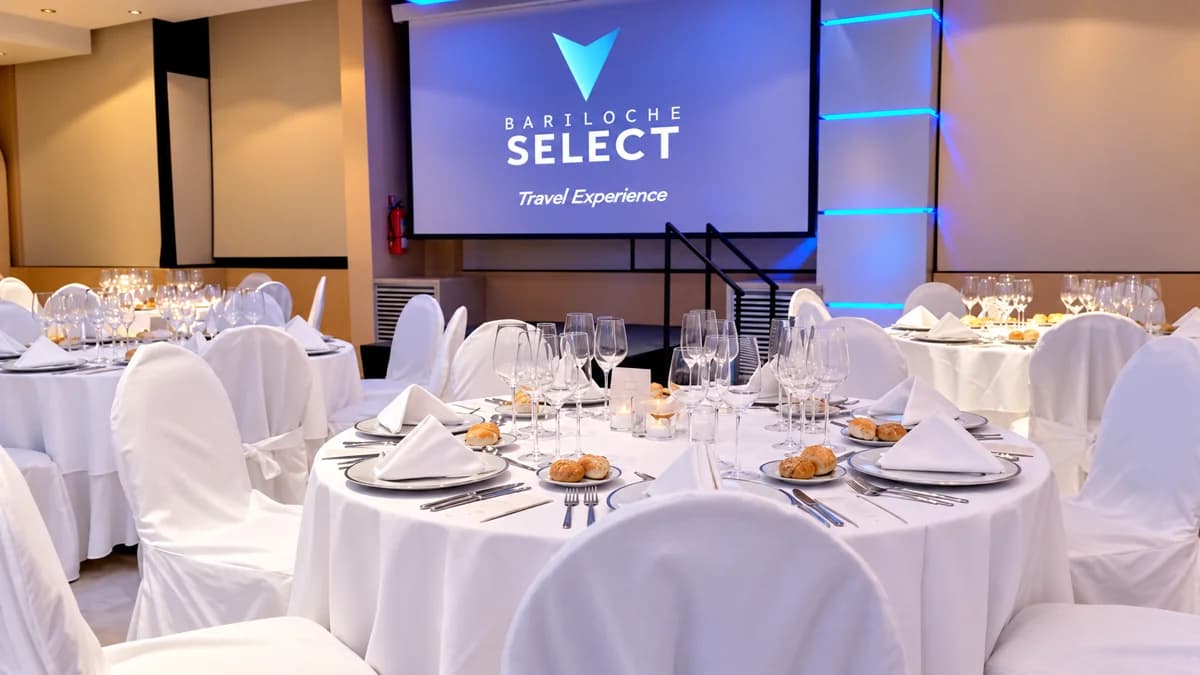
- Hotel and meeting room held. For a medium or large group the room drives the hotel, not the other way round: there are beautiful hotels whose largest room will not seat your group at round tables, which take far more floor than rows of chairs.
- Room layout decided. Theatre, round tables, classroom, U-shape. The same room's capacity changes by almost half between them, and so does set-up time.
- Flights. The bigger the group, the less flexible the air. For Bariloche in snow season, flights close early or you end up paying a lot more.
Eight to four weeks out
- Hour-by-hour programme, approved. With real transfer times built in, not map times. A bus with 50 people takes longer than a car on the same route, and loading and unloading a group genuinely adds up.
- Technical requirements in writing. Projector and the connection it takes (there are still rooms with HDMI only and laptops with USB-C only), sound, handheld and lapel microphones, lectern, screen, wired internet for a live presentation if there is streaming, and enough power. The thing that fails most is not the projector: it is the hotel wifi when 60 people connect at once.
- Catering and dietary restrictions. Collected from the team that is travelling, never estimated. Vegetarian, vegan, coeliac, allergies. And confirm the hotel kitchen can actually handle them, not just that it said yes.
- Transfers locked. How many vehicles, at what time, from where, with how many minutes of slack. If there are two flights arriving apart, decide whether the group waits or whether there are two transfers.
- Weather plan B, quoted. Not described: quoted. In the Andes an excursion falls through with two hours' notice, and plan B has to be booked, not imagined.
- An activity with two levels. The social part of the programme has to include the whole group. Team building activities and what each one is good for covers what works with mixed groups.
Three to two weeks out
- The briefing to the team. What to pack, what to wear, how demanding each activity is, what time the bus leaves. In winter this matters more than it sounds: plenty of people turn up without the right clothing because nobody told them clearly. What to pack for the snow works as the basis for that message.
- Travel documents. If people are flying in from another country, check now, not at the airport. The requirements for entering Chile and Argentina have details that catch people out every year.
- Final passenger list, with names exactly as they appear on the ID, not as everyone says them at the office.
- Who is the company's lead on the ground. One person, with a phone, who can decide when something has to be decided on the spot.
The week before
- Reconfirm hotel, room, catering, transfers and activities.
- A technical rehearsal agreed with the hotel: a day and time to test projector, sound and internet before the group arrives, not fifteen minutes before the session starts.
- Plan B printed or on the coordinator's phone.
- Emergency and insurance contacts, held by more than one person.
During
- A coordinator on site, the whole time. Not a luxury: it is what keeps a delayed flight or a change in the weather from becoming the memory of the event.
- Downtime is part of the programme. A convention with no open space produces people who spoke to nobody, which is usually half the point.
- The closing matters. A final dinner or a sunset with the whole group is worth more than an extra activity squeezed into the last morning.
Afterwards
- A short survey to the team while it is fresh, within two or three days. Three open questions is enough.
- A record of what slipped and why. That is what stops next year's convention repeating the same problem.
The four points where something always slips
- The meeting room internet when the whole group connects at once.
- Transfer times, worked out on a map rather than with a real bus loading and unloading.
- Dietary restrictions, collected late or never confirmed with the kitchen.
- The weather, when plan B existed only as an idea.
If you are still deciding where to hold it, Bariloche or Santiago for a company event compares capacity, air connections and seasonality, and how to organise an incentive trip covers the case where the event is a reward rather than a meeting.
Frequently asked questions
How far ahead should an off-site company convention be planned?
Hotel and meeting room are held twelve to eight weeks out, and the hour-by-hour programme is approved eight to four weeks out. In peak season, such as July in Bariloche or the Chilean winter school holidays, hold them earlier: meeting-room availability runs out before rooms do.
What should the hotel confirm in writing about the meeting room?
The layout and its real capacity, the projector and which connection it takes, sound, handheld and lapel microphones, screen, available power, wired internet if there is streaming, and an agreed window for a technical rehearsal before the group arrives. The thing that fails most is the wifi once the whole group connects at the same time.
How do you work out transfer times for a group?
Never from a map. A loaded bus is slower than a car, and getting 50 people with luggage on and off adds real minutes at both ends. Add explicit slack to every transfer, and more in winter, when the road to the ski resorts can have snow or a checkpoint.
Do you need a coordinator on site if the itinerary is already closed?
Yes. A closed itinerary is a document; what holds the programme together when a flight is delayed, the weather turns or a supplier shifts is a person on the ground who can decide there and then.