Francisca
Marketing · Vivencias Travel
In winter, Buenos Aires calls for outings that mix warmth and culture: walking through Caminito and San Telmo, visiting the Teatro Colón and Recoleta, eating at a parrilla, seeing a tango show and warming up in the historic cafés, while the exchange rate works in your favour.
In winter, Buenos Aires calls for outings that mix warmth and culture: walking through Caminito and San Telmo, visiting the Teatro Colón and Recoleta, eating at a good parrilla, seeing a tango show and warming up in the historic cafés. The exchange rate also works in your favour.
What is the weather like in Buenos Aires in winter?
July is statistically the coldest month of the year in the city, averaging around 11 degrees. During the day the thermometer usually sits between 10 and 16 degrees, and at night it drops to about 7 to 9, reaching 4 or 5 on the chilliest early mornings. August is slightly milder, with highs climbing towards 18 degrees.
Good news for anyone who hates carrying an umbrella: July is one of the driest months, with around 8 rainy days and an average of 5 hours of sun a day, even if the sky is often overcast. It never snows in Buenos Aires, because the city is at sea level, but what really bites is the wind chill. The humidity and the wind off the Río de la Plata make the cold feel sharper than the thermometer suggests, so bring a heavy coat, a scarf and comfortable closed shoes.
What is there to do in Buenos Aires in winter?
The cold suits the city and releases a more intimate version of it. With the trees bare, the façades of the palaces and historic buildings appear in full, which makes walking even more rewarding.
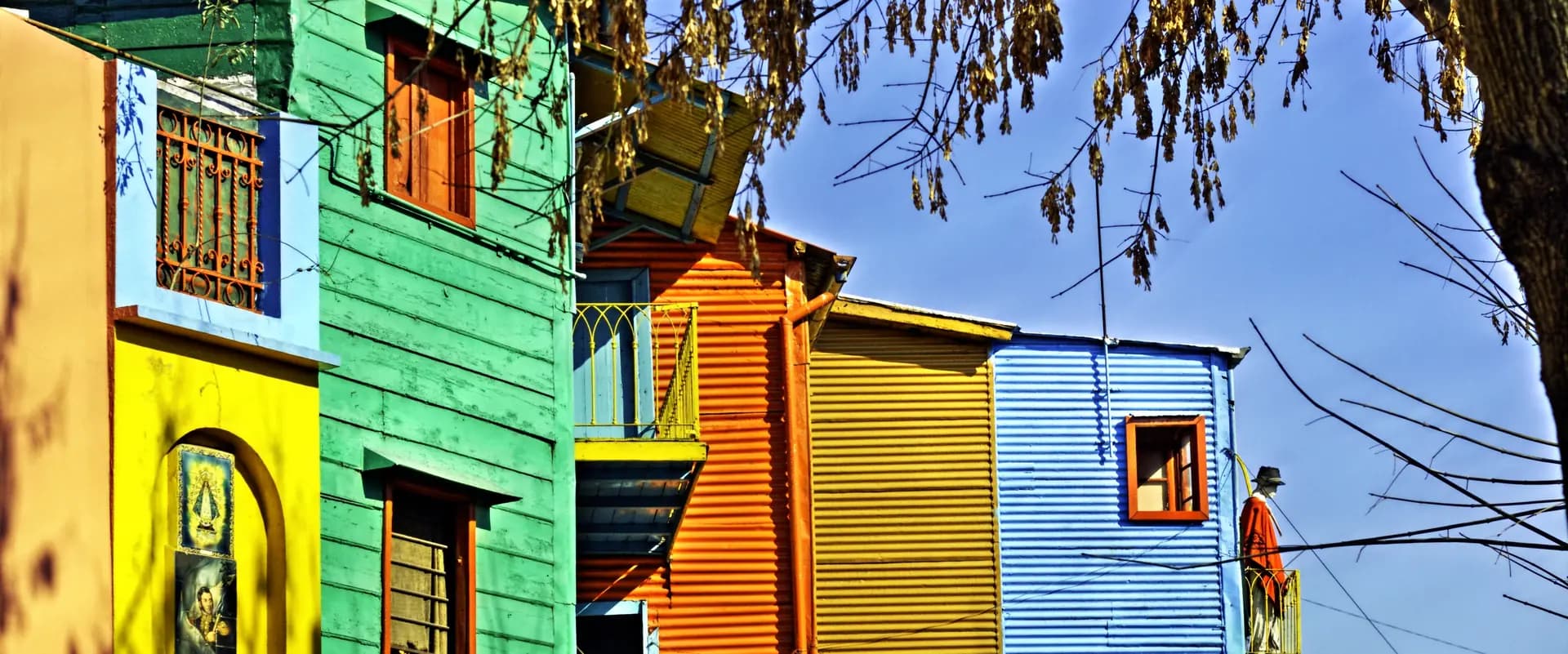
Start at Caminito, in the La Boca neighbourhood, that 150-metre stretch of colourful conventillos built of sheet metal and wood, with tango playing outdoors and La Bombonera, Boca Juniors' stadium, right next door. From there, San Telmo is essential, especially on Sundays, when Defensa street and Plaza Dorrego fill with the antiques fair and tango performances on the pavement.
Puerto Madero shows the modern face of the city, with its restored docks, restaurants and the Puente de la Mujer. Recoleta brings European elegance, with mansions, the famous cemetery where Evita rests and the El Ateneo Grand Splendid bookshop nearby. If it rains, the museums save the day: the National Museum of Fine Arts, MALBA (Latin American art) and the Evita Museum are excellent choices.
Are the Teatro Colón and the historic cafés worth visiting?
Very much so, and winter even helps. The Teatro Colón runs guided tours every day, departing every 15 minutes, and during the winter holidays it usually extends its hours (in 2026 the extended period ran from 1 July to 2 August, 9:30am to 5:15pm). The tour takes in the Main Hall, the Principal Foyer, the Gallery of Busts and the Golden Room, and tickets can be bought at the box office (Tucumán 1171) or on the official site, teatrocolon.org.ar.
On the coldest days, the historic cafés are the perfect refuge. El Ateneo Grand Splendid, set inside a 1919 theatre with frescoes on the ceiling and red velvet curtains, is described by many guides as the most beautiful bookshop in the world, and has a café set up on the old stage. Order a submarino, the classic Argentine hot chocolate where you drop a chocolate bar into hot milk. It is the definition of winter comfort.
Where should you eat in Buenos Aires in winter?
The cold is the best invitation to Argentine beef. The parrillas are the heart of the city's food scene, and the bife de chorizo, tender and full of flavour, is practically compulsory.
Among the most celebrated is Don Julio, in Palermo, which in 2025 topped The World's 50 Best list as the finest restaurant in Latin America, with Angus and Hereford beef and a vast cellar. La Cabrera, also in Palermo, is a tourist favourite and almost always needs a booking. For a more down-to-earth experience, El Desnivel, in San Telmo, serves top-quality beef in simple surroundings, and Lo de Jesús has been running since 1953.
On freezing nights, take the chance to open a good bottle of Malbec, since winter is the ideal wine season, and close the trip with a tango show. El Viejo Almacén, in San Telmo, was the city's first tango house, opened in 1969, and Rojo Tango, at the Faena Hotel in Puerto Madero, is the most luxurious and intimate option.
Does the exchange rate work in your favour in winter?
Yes, and that is one of the destination's big draws. Argentina controls the buying and selling of dollars, which created a parallel market known as the dólar blue, with a more favourable rate than the official one. In practice, that means paying in cash, with pesos changed at the blue rate, usually goes much further than using an international card, which applies the official rate.
For Brazilian travellers, a common strategy is to bring reais and change them directly at the blue exchange houses, which operate around Florida street, in Recoleta and in San Telmo, including at weekends.
Bear in mind that July is school holiday month in Argentina and the city fills up then, so booking hotels, dinners, tango shows and outings in advance avoids missing out or paying more. Planning is what separates a smooth trip from a miserable one in the cold.
If you are planning the whole trip, the complete guide to travelling in Argentina covers documents, the best season, how many days and how to pair it with Santiago.
Frequently asked questions
What is Buenos Aires like in winter?
July is the coldest month, averaging around 11 degrees: 10 to 16 by day and 7 to 9 at night, dropping to 4 or 5 on the coldest nights. August is slightly milder. It never snows, but humidity and wind off the Río de la Plata make the cold feel sharper than the thermometer suggests.
What is there to do in Buenos Aires in winter?
Caminito and La Boca, San Telmo (especially Sundays, with the Plaza Dorrego market), Puerto Madero, Recoleta and the El Ateneo Grand Splendid bookshop. If it rains, the museums carry the day: Fine Arts, MALBA and the Evita Museum.
Is the Teatro Colón worth visiting?
Yes, and winter helps. The theatre runs guided tours every day, departing every 15 minutes, with extended hours during the winter holidays. The visit covers the auditorium, the main foyer, the Gallery of Busts and the Golden Hall; tickets are sold at the box office or on the official site.
Where should you eat in Buenos Aires in winter?
The cold is the best excuse for a parrilla and a bife de chorizo. Don Julio, in Palermo, topped The World's 50 Best in 2025 as Latin America's best restaurant; La Cabrera almost always needs a booking; El Desnivel, in San Telmo, serves top-level beef in a plain setting.
Sources
- Argentina Travel (site oficial de turismo)
- Turismo Buenos Aires (site oficial da cidade)
- Teatro Colón
- Grupo Dicas de Viagem
- Dicas da Argentina
- Nomad Global
- Aguiar Buenos Aires
- Melhores Destinos
- Viaje na Viagem
- Secrets of Buenos Aires
- Buenos Aires Turismo (moeda e câmbio)
- National Geographic (El Ateneo Grand Splendid)